3 Easy Water Heater Maintenance and Care Guide Tricks That Changed My Routine
3 Easy Water Heater Maintenance and Care Guide Tricks That Changed My Routine
Most homeowners don’t think about their water heater until something goes wrong. That was exactly my situation a few years ago. One winter morning I turned on the shower expecting hot water, but instead I got a burst of icy disappointment.
That moment forced me to learn something important: water heaters need simple but consistent care.
The good news is that maintaining a water heater is not complicated. In fact, after some research and a little trial and error, I discovered three easy water heater maintenance tricks that completely changed my routine.
These simple habits improved my heater’s efficiency, reduced electricity and gas usage, and extended the life of the unit.
In this detailed guide, I’ll walk you through:
- Why water heater maintenance matters
- The 3 easy tricks that changed my routine
- Practical steps anyone can follow
- Maintenance schedules
- Helpful charts and tables
- Common mistakes to avoid
- FAQs homeowners often ask
By the end, you’ll have a clear maintenance routine that keeps your water heater running efficiently for years.
Why Water Heater Maintenance Matters
A water heater is one of the hardest-working appliances in any home. It quietly heats water for showers, washing dishes, doing laundry, and countless daily tasks.
But over time several issues can develop:
- Sediment buildup
- Reduced heating efficiency
- Higher energy bills
- Corrosion inside the tank
- Strange noises
- Shorter heater lifespan
Without maintenance, even a high-quality water heater can fail earlier than expected.
Average Water Heater Lifespan
| Type of Water Heater | Average Lifespan |
|---|---|
| Electric Tank Heater | 10–15 years |
| Gas Water Heater | 8–12 years |
| Tankless Water Heater | 15–20 years |
Routine care can easily add 3–5 extra years of life to a heater.
My Experience Before Learning Proper Maintenance
Before adopting these simple tricks, I made several common mistakes:
- I never flushed the tank.
- I ignored strange rumbling noises.
- I never checked the temperature setting.
- I didn’t inspect valves or pipes.
As a result:
- My energy bill slowly increased.
- Hot water recovery became slower.
- The heater started making popping sounds.
Once I started implementing a few simple maintenance habits, everything changed.
The 3 Easy Water Heater Maintenance and Care Tricks
These three tricks require minimal effort but deliver major benefits.
Trick 1 — Flush the Tank Once a Year
Trick 2 — Adjust the Temperature for Efficiency
Trick 3 — Inspect the Anode Rod Regularly
Let’s break down each one in detail.
Trick #1: Flush the Tank Once a Year
This was the biggest game-changer for me.
Over time minerals from water settle at the bottom of the tank and create sediment buildup.
This layer reduces heating efficiency and causes strange noises.
Signs Your Tank Needs Flushing
| Warning Sign | What It Means |
|---|---|
| Rumbling sounds | Sediment heating inside tank |
| Slow heating | Heating element blocked |
| Higher energy bills | Heater working harder |
| Dirty hot water | Sediment circulating |
Flushing removes the buildup and restores efficiency.
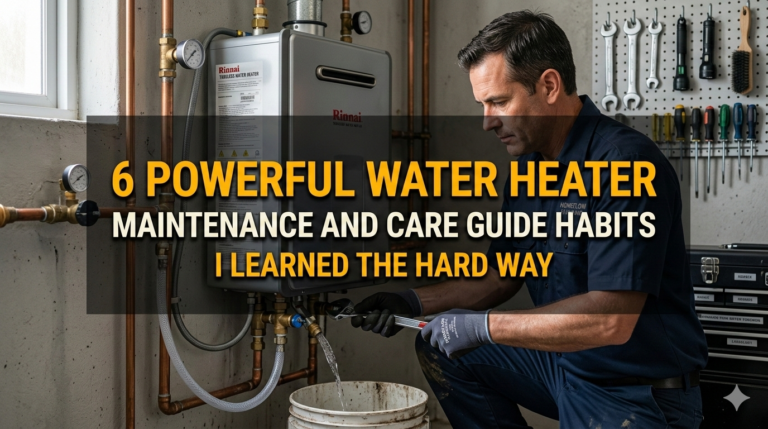
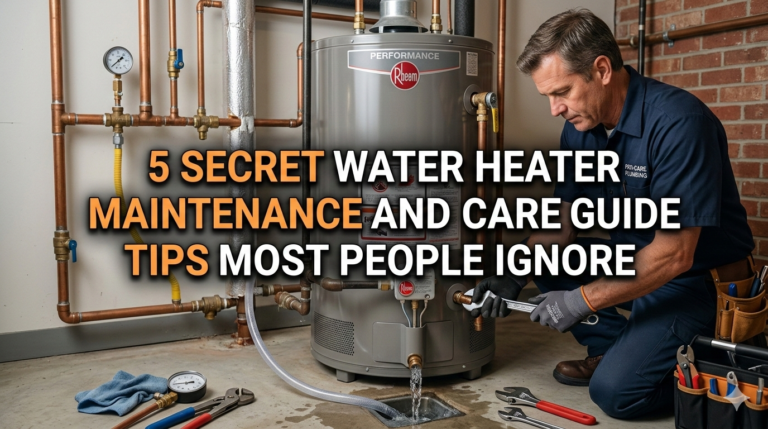
Step-by-Step Tank Flushing Process
Follow these steps carefully:
- Turn off power or gas supply
- Shut off the cold water supply
- Connect a hose to the drain valve
- Place the hose in a drain or bucket
- Open the valve and drain the tank
- Turn cold water briefly to flush sediment
- Close the valve and refill the tank
Estimated Time
| Step | Time Required |
|---|---|
| Preparation | 5 minutes |
| Draining tank | 15–25 minutes |
| Flushing sediment | 5 minutes |
| Refilling tank | 10 minutes |
Total time: 30–40 minutes
For something that only needs to be done once a year, the benefits are huge.
Trick #2: Adjust the Temperature for Efficiency
Most water heaters come preset to 140°F (60°C).
That’s actually higher than necessary for most homes.
Lowering the temperature slightly can save energy while still providing comfortable hot water.
Ideal Water Heater Temperature
| Temperature | Effect |
|---|---|
| 120°F (49°C) | Ideal balance of comfort and efficiency |
| 130°F (54°C) | Slightly hotter but still safe |
| 140°F (60°C) | Higher energy consumption |
| Above 140°F | Risk of scalding |
I adjusted mine to 120°F, and within two months I noticed a small drop in my electricity bill.
Benefits of Lowering Temperature
- Reduces energy consumption
- Prevents scalding accidents
- Slows mineral buildup
- Extends heater lifespan
Even a 10–20 degree reduction can make a difference.
Trick #3: Inspect the Anode Rod
This is one of the most overlooked maintenance steps.
The anode rod is a metal rod inside the tank that protects it from rust.
It sacrifices itself to prevent the tank from corroding.
Think of it as a bodyguard for your water heater.
How the Anode Rod Works
| Component | Role |
|---|---|
| Tank metal | Holds heated water |
| Anode rod | Attracts corrosion |
| Minerals in water | Cause rust reactions |
Without the anode rod, the tank would rust much faster.
When to Replace the Anode Rod
| Condition | Action |
|---|---|
| Rod less than 50% worn | No replacement needed |
| Rod heavily corroded | Replace soon |
| Rod completely eaten away | Replace immediately |
Checking it every 2–3 years is usually enough.
Simple Annual Maintenance Routine
Once I learned these tricks, I created a simple yearly routine.
| Month | Maintenance Task |
|---|---|
| January | Check heater temperature |
| March | Inspect valves |
| June | Flush the tank |
| September | Check anode rod |
| December | Inspect pipes |
This schedule keeps everything running smoothly.
Energy Savings From Proper Maintenance
Proper water heater maintenance doesn’t just protect the appliance — it also saves money.
Estimated Savings
| Maintenance Action | Potential Savings |
|---|---|
| Lowering temperature | 5–10% energy savings |
| Flushing sediment | 10–15% efficiency gain |
| Replacing anode rod | Avoid costly tank replacement |
Over several years, these small improvements can add up to hundreds of dollars saved.
Common Water Heater Problems and Solutions
| Problem | Possible Cause | Quick Fix |
|---|---|---|
| No hot water | Power supply issue | Check breaker or gas |
| Water too hot | Thermostat too high | Lower temperature |
| Strange noises | Sediment buildup | Flush tank |
| Rusty water | Corroded anode rod | Replace rod |
Recognizing problems early prevents bigger repairs later.
Maintenance Checklist (Printable Guide)
Use this simple checklist to track maintenance tasks.
| Task | Frequency |
|---|---|
| Check thermostat | Every 6 months |
| Inspect valves | Yearly |
| Flush tank | Once per year |
| Inspect anode rod | Every 2–3 years |
| Check pipes for leaks | Twice per year |
Safety Tips When Maintaining a Water Heater
Always keep safety in mind.
Important precautions:
- Turn off power before maintenance
- Let water cool before draining
- Wear gloves when handling parts
- Avoid over-tightening valves
- Keep children away during maintenance
These precautions prevent accidents.
Mistakes Many Homeowners Make
During my early learning stage, I made several mistakes.
Here are some you should avoid.
1. Ignoring Strange Noises
Rumbling sounds usually mean sediment buildup.
2. Setting the Temperature Too High
This wastes energy and increases risk of burns.
3. Never Flushing the Tank
Sediment accumulation is the most common cause of heater inefficiency.
4. Waiting Too Long for Repairs
Small issues quickly become expensive repairs.
How Maintenance Extends Heater Life
Proper maintenance can dramatically increase lifespan.
Heater Lifespan Comparison
| Maintenance Level | Expected Lifespan |
|---|---|
| No maintenance | 6–8 years |
| Basic maintenance | 10–12 years |
| Proper yearly care | 15+ years |
That’s a huge difference for such simple tasks.
Signs Your Water Heater Needs Replacement
Even with good care, water heaters eventually wear out.
Watch for these warning signs:
- Frequent leaks
- Rusty water
- Constant repairs
- Rising energy bills
- Water not staying hot
If your heater is over 12 years old, replacement may be more cost-effective.
Final Thoughts
When I first started learning about water heater care, I expected complicated procedures and expensive tools.
Instead, I discovered something surprising.
Most of the improvements came from three simple tricks:
- Flushing the tank once a year
- Adjusting the temperature to 120°F
- Inspecting the anode rod periodically
These habits take very little time but dramatically improve efficiency and reliability.
Now my water heater runs quietly, heats water faster, and uses less energy.
And the best part?
I no longer worry about waking up to an icy cold shower.
Frequently Asked Questions (FAQs)
1. How often should I flush my water heater?
Most experts recommend flushing the tank once a year to remove sediment buildup and maintain efficiency.
2. What is the safest temperature setting for a water heater?
The recommended setting is 120°F (49°C) because it balances safety, comfort, and energy efficiency.
3. How long does a typical water heater last?
Traditional tank heaters usually last 8–15 years, depending on maintenance and water quality.
4. What does it mean if my water heater makes popping sounds?
Popping or rumbling sounds usually indicate sediment buildup at the bottom of the tank.
5. Do tankless water heaters need maintenance?
Yes. Tankless systems should be descaled annually to prevent mineral buildup.
6. Can I perform water heater maintenance myself?
Basic tasks like flushing the tank and adjusting temperature are DIY-friendly, but complex repairs should be handled by a professional.
About the Author