7 Smart Water Heater Maintenance and Care Guide Solutions for Strange Noises
Meta Description: Water heater maintenance and care guide for strange noises helps you silence banging, popping, and rumbling sounds fast — saving money and extending your unit’s life.
7 Strange Noises Solutions: Water Heater Maintenance and Care Guide
Does your water heater sound like it’s banging, popping or rumbling in the middle of the night? You’re not alone. Every year, millions of homeowners search for answers to strange noises coming from their water heaters — and most have no idea what the problem is.
Here’s the good news: Most of these sounds are fixable. And you don’t need to immediately call a plumber.
This water heater maintenance and care guide takes you through 7 proven solutions to diagnosing and ending those confounding sounds for good. You can use this guide regardless of whether your unit is new or 10 years old.
Let’s get started.
What To Do If Your Water Heater Makes Strange Noises
It’s helpful to understand why water heaters make noise to begin with, before leaping into solutions.
Water heaters contend with extreme heat, high pressure and minerals in your water supply day after day. These factors wear parts over time and create problems that manifest as sound.
Here are some of the most common noises and what they typically mean:
| Noise Type | Probable Cause |
|---|---|
| Popping or crackling | Sediment buildup on heating element |
| Rumbling or gurgling | Sediment in bottom of tank |
| Banging or knocking | Water hammer or loose pipes |
| Hissing | Leak or pressure issue |
| Ticking | Expansion and contraction of pipes |
| Screeching | Faulty pressure relief valve |
The first step is just to understand the sound. Now let’s fix it.
Solution 1: Flush Out That Noise-Making Sediment
Number one enemy for water heaters is sediment. It’s the No. 1 cause of unusual noises — specifically that loud popping or rumbling when the heater fires up.
Here’s what happens. Over time, minerals such as calcium and magnesium in your water supply accumulate at the bottom of the tank. If your heating element attempts to raise the temperature of the water, it needs to burn through that layer of build-up first. That process is what generates the popping and crackling sounds you hear.
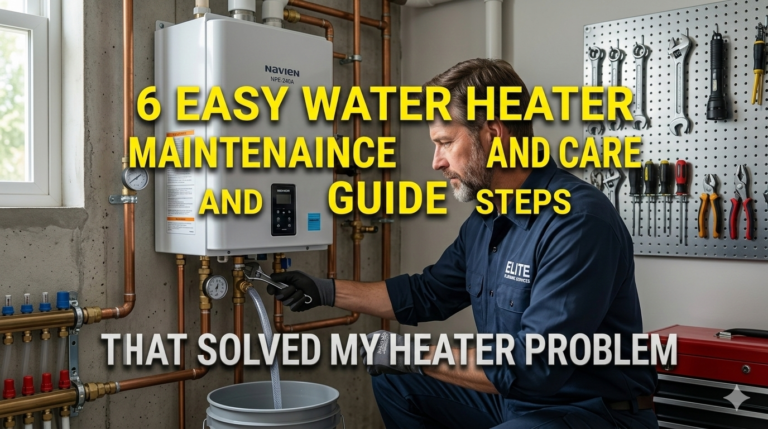
Step-by-Step Guide to Flushing Your Water Heater
Flushing a water heater is simpler than it sounds. You can do it yourself in roughly an hour.
What you’ll need:
- A garden hose
- Flat-head screwdriver
- Work gloves
Steps:
- Shut off the power (or gas) to the heater
- Thread a garden hose onto the drain valve at the bottom of the tank
- Direct the other end of the hose to a floor drain or outdoors
- Shut off the cold water supply to the tank
- Open a hot water faucet in the home to avoid a vacuum
- Open the drain valve and let it completely drain out the tank
- Briefly reinstate the cold water supply to flush out anything remaining
- Close the drain valve, refill the tank and restore power
How often should you do this? At least once a year. Every six months is better if you have hard water.
80% of standard water heater sounds can be eliminated simply by flushing. It’s the greatest bang-for-the-buck step out there in any water heater maintenance and care guide.
Solution 2: Inspect and Replace the Anode Rod Before It Leads to a Malfunction
When it comes to a water heater, the anode rod is one of its most ignored components. Most homeowners don’t even know it’s there.
Here’s what it does. The anode rod is a long metal rod — typically magnesium or aluminum — that resides deep inside your tank. It draws corrosive minerals in the water so they erode the rod instead of the tank walls. It literally sacrifices itself for the sake of your heater.
When the anode rod has corroded to the point that it is worn out, corrosion now begins to attack the tank itself. That leads to rust, leaks and odd hissing or gurgling noises.
Signs That Your Anode Rod Needs Replacing
- Your water smells like rotten eggs
- You see rusty or discolored water
- The heater itself is older than 3 years and the rod has never been inspected
- Unusual hissing or gurgling sounds come from the heater
How to Check and Change the Anode Rod
- Disconnect the power and cold water supply
- Find the anode rod — typically under a plastic cap at the top of the heater
- Unscrew it with a 1 1/16-inch socket wrench
- If it’s less than half an inch thick or has a calcium crust, replace it
- Before installing, wrap the new rod threads with Teflon tape
- Thread the new rod in and turn on water and power
Replacement anode rods cost $20 to $50. Replacing every 3 to 5 years can add years to the life of your heater.
Solution 3: Repair the Water Hammer Slamming Through Your Pipes
That loud banging noise you hear as soon as you turn off the shower? That’s called water hammer. It’s not coming from inside the tank — it’s occurring in your pipes.
Water hammer is an effect that happens when a column of water moving quickly comes to a sudden stop or is suddenly forced to change direction. The force of that stopping water creates a shockwave that travels through your pipes and sounds like a hammer strike.
If left untreated, water hammer can cause the joints on your pipes to shake, loosen connections and even crack the inlet pipe of your water heater.
How to Stop Water Hammer
Option 1: Fit a Water Hammer Arrestor
This is the easiest fix. A water hammer arrestor is a small device designed to cushion the shock caused by rapid changes in water pressure. You can get one at any hardware store for $10 to $25.
Install it near the shutoff valve nearest where the banging occurs. No special tools required.
Option 2: Secure Loose Pipes
Sometimes the banging comes from pipes that are not strapped down properly. Inspect your pipes in the basement, crawl space or utility room. Hold them in place with pipe clamps or foam pipe insulation.
Option 3: Reduce Water Pressure
Water hammer is exacerbated by high water pressure. Home water pressure is recommended between 40 and 60 PSI. 80 PSI and above is too high.
You can check pressure with an inexpensive gauge from the hardware store. You can reduce too-high water pressure by adjusting your pressure-reducing valve (PRV), located close to where your main water shutoff is.
Solution 4: Tweak the Temperature to Stop Overheating Noise
The temperature setting on your water heater affects noise more than most people realize. When the temperature is too high, the water gets hotter than normal and forms steam bubbles inside the tank — and those bubbles make noise when they burst.
Water heaters are set to 140°F by default by most manufacturers. But the U.S. Department of Energy advises 120°F for most homes. That lower setting helps cut noise, save energy and reduce your risk of getting burned.
How to Adjust the Temperature
For electric water heaters:
- Kill the power at the breaker
- Detach the side access panel on the heater
- Pull back the insulation carefully
- Adjust the thermostat dial using a flat-head screwdriver
- Refit insulation and panel, then re-energize the system
For gas water heaters:
- Most gas valves will have the thermostat dial on their front side
- Set it to the desired level (you’re looking for the 120°F mark)
After making the adjustment, let a hot water tap run for a few minutes, then check the temperature with a cooking thermometer.
Solution 5: Check for Scaling on the Heating Element
In the case of electric water heaters, it is the heating element that heats the water. When mineral scale builds up and coats the element, it has to work much harder at its job — and that added effort generates loud popping and crackling noises.
In the worst cases, a failing heating element might also make hissing or sizzling noises. That generally means that water is leaking onto the element itself.
How to Inspect the Heating Element
- Kill the power at the breaker
- Empty the tank (Solution 1 contains the steps)
- Using a heating element wrench, unscrew the element
- Note large white or yellow carbonate scale deposits
- Search for any cracks or burn marks
In case of heavy scaling, you can clean the element with white vinegar. If it is heavily damaged, replace it. A new heating element runs $10 to $40 and installation takes roughly 30 minutes.
Heating Element Lifespan Chart
| Usage Level | Average Element Lifespan |
|---|---|
| Soft water area | 10–15 years |
| Moderate hard water | 6–10 years |
| Very hard water | 3–6 years |
And this is why it’s important to have a sense of local water hardness. In hard water areas, inspect your element every couple of years.
Solution 6: Test the Pressure Relief Valve Right Now
The temperature and pressure relief valve — also known as the T&P valve — is an important safety device. It’s meant to release pressure should the tank become dangerously hot or over-pressurized.
When something goes wrong with this valve, it may make hissing, screeching or clicking noises. Even worse, a bad T&P valve is a serious safety issue. If that pressure builds up inside a tank without being released, it can lead to catastrophic results.
This step in your water heater maintenance and care guide is one you should never miss.
How to Test the T&P Valve
- Put a bucket under the discharge pipe attached to the valve
- Quickly lift the test lever — water should come out
- Let go of the lever — it should stop flowing altogether
If nothing comes out, the valve is stuck. If water continues to dribble after you let go of the lever, the valve needs to be replaced.
When to Replace the T&P Valve
- It’s more than 5 years old
- It leaks constantly
- It fails the test above
- You hear hissing near the valve
Replacement T&P valves cost $15 to $30. Ensure the new valve is compatible with your heater’s BTU rating and pressure specs. You can find this information on the label of your existing valve.
Solution 7: Insulate Your Pipes to Dampen Ticking and Expansion Noise
That rhythmic ticking noise your water heater makes? More often than not it isn’t even coming from the tank. It’s your pipes expanding and contracting as hot water runs through them.
Metal pipes expand slightly when they heat up. They shrink when the water cools. When the pipes rub against walls, floor joists or pipe straps, they make a ticking or creaking noise.
This is all perfectly normal — but it can also be annoying. The fix is simple.
How to Silence Pipe Expansion Noise
Step 1: Foam-insulate your pipes
Foam pipe insulation sleeves are inexpensive and simple to install. Slip them over your hot water pipes wherever they pass through close quarters or contact hard surfaces. This softens the expansion and halts the ticking.
Step 2: Swap out rigid pipe straps with cushioned ones
Hard metal pipe straps pull pipes tight against studs or joists. The pipe rubs when it expands. Switch to cushioned pipe straps that have a rubber or foam lining. They allow some movement without making noise.
Step 3: Check for pipes running through holes in joists
Sometimes pipes go through drilled holes in the floor joists. A fit that is too tight causes the pipe to rub as it expands. You can line the hole with foam or a rubber grommet so it has room to breathe.
Full Maintenance Schedule Overview
Getting on top of your water heater doesn’t need to be complicated. Follow this easy schedule so that you can take care of things before they become an expensive fix.
| Task | Frequency |
|---|---|
| Flush sediment from tank | Every 6–12 months |
| Test T&P relief valve | Every 6 months |
| Inspect anode rod | Every 1–3 years |
| Check heating element | Every 2–3 years |
| Inspect pipes and insulation | Once a year |
| Adjust temperature setting | As needed |
| Check water pressure | Once a year |
Print this out and tape it to your water heater. The maintenance plan takes less than two hours a year to follow — and can add 5 to 10 years of life to your heater. For more expert tips and step-by-step resources, visit Water Heater Care — your go-to source for keeping your water heater running safely and efficiently.
When to Call a Professional
Most of the solutions in this water heater maintenance and care guide are DIY-friendly. But some things require a licensed plumber or HVAC technician.
Call a professional if:
- You notice a gas smell around your water heater
- You notice standing water around the base of the tank
- The T&P valve keeps releasing pressure repeatedly
- No matter how much you flush, your water is always rusty or discolored
- The heater is 12+ years old and making loud sounds
Attempting to fix gas appliance parts yourself is hazardous. Never attempt gas line work yourself — always contact a qualified professional.
FAQs on Noisy Water Heaters and Maintenance
Q: Is it common for a water heater to make noise?
Some noise is normal, namely a low hum or occasional ticking. Loud popping, banging or screeching sounds are a real problem that needs to be checked out.
Q: What is the lifespan of a water heater?
Average tank-style water heaters have a lifespan of 8 to 12 years. Regular maintenance, using this water heater maintenance and care guide, can stretch that to nearly 15 years.
Q: Should I flush my water heater myself?
Yes. Flushing is a basic DIY job that most homeowners can complete in roughly an hour. Refer to the steps in Solution 1 above.
Q: Why does my water heater make loud popping noises in the morning?
This means sediment has typically settled and collected at the bottom of the tank overnight. When your heater turns on to reheat the water, it bubbles through that sediment layer and makes that popping noise. The way to correct it is by flushing out the tank.
Q: How can I tell if my anode rod needs to be replaced?
For an older heater (3 years or more), if your hot water has a rotten egg smell or appears discolored, it is likely the anode rod causing this. Check it, and if seriously corroded, replace it.
Q: What does a hissing water heater sound mean?
Hissing can mean a variety of things — a leaking T&P valve, a cracked tank or water dripping onto the heating element. Check the T&P valve first. If it isn’t the source, hire a professional.
Q: What is the cost of water heater maintenance?
Basic DIY maintenance is very inexpensive — typically just replacement parts such as an anode rod ($20–$50) or a T&P valve ($15–$30). Professional maintenance visits generally cost $80 to $200 based on your region.
Wrapping It All Up
Unusual sounds coming from your water heater are usually a clear indication something requires attention. The sooner you do something, the easier and cheaper it can be to fix.
This water heater maintenance and care guide provided you with 7 clear, actionable solutions to solve the most common causes of water heater noise — whether due to sediment buildup and a failing anode rod or from issues like water hammer and pipe expansion.
You don’t have to be a plumber to take care of most of these repairs. A bit of time, some simple tools and an annual maintenance habit will keep your water heater running quietly and efficiently for years to come.
Begin with the simplest step — flushing your tank — and move down the list. Your wallet (and your sleep) will be thanking you.
About the Author