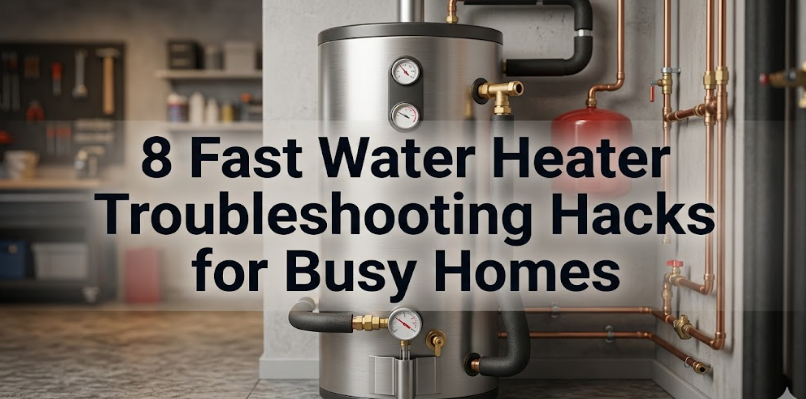
8 Fast Water Heater Troubleshooting Hacks for Busy Homes
8 fast water heater troubleshooting hacks for busy homes
There’s something uniquely frustrating about stepping into a shower expecting comfort, only to be greeted by an icy surprise. In a busy home, where mornings are rushed and evenings are tightly scheduled, a malfunctioning water heater isn’t just an inconvenience—it’s a disruption to the rhythm of everyday life. Over time, I’ve learned that most water heater problems don’t appear out of nowhere. They whisper before they scream. And if you know where to listen—and what to do—you can often fix them quickly without calling in a professional.
This guide isn’t just a list of fixes. It’s a collection of practical, real-life troubleshooting habits and quick-response hacks designed for people who don’t have hours to spare. Think of it as a toolkit you can rely on when things go wrong.
hack 1: reset before you panic
One of the simplest fixes is also the most overlooked. When hot water suddenly disappears, many people assume the worst—burnt elements, tank failure, or major electrical issues. But often, the problem is just a triggered reset button.
Most electric water heaters have a reset button, usually located behind a small panel. It’s a safety feature that trips when the system detects overheating or electrical irregularities. Pressing it can restore your hot water within minutes.
Here’s how to do it quickly:
- Turn off the power from the circuit breaker
- Open the access panel carefully
- Press the reset button firmly
- Restore power and wait
If it works, great. If it trips again soon after, that’s a sign of a deeper issue—but at least you’ve bought yourself time.
mini checklist:
- No hot water at all? Try reset first
- Power outage recently? Reset is likely needed
- Water heater older than 5 years? Reset may become frequent
hack 2: flush out the hidden buildup
In busy households, maintenance is often delayed until something breaks. But water heaters quietly collect sediment at the bottom of the tank—especially in areas with hard water.
That sediment acts like insulation, forcing the heater to work harder and reducing efficiency. You may notice:
- Lukewarm water instead of hot
- Strange rumbling sounds
- Longer heating times
A quick flush can make a noticeable difference.
simple flushing process:
- Turn off power and water supply
- Attach a hose to the drain valve
- Let the water flow out into a bucket or drain
- Turn water back on briefly to stir remaining sediment
Even a partial flush can improve performance. It doesn’t need to be perfect—just enough to clear the worst buildup.
real-life tip:
If you’re short on time, do a “quick flush” for 5–10 minutes instead of a full drain. It’s not ideal, but it’s far better than doing nothing.
hack 3: fix temperature swings in seconds
Few things are more annoying than a shower that keeps changing temperature. One second it’s comfortable, the next it’s too hot or too cold.
This is often caused by a thermostat imbalance or fluctuating demand.
quick fixes:
- Lower the thermostat slightly (try 120°F or equivalent)
- Avoid running multiple hot water appliances simultaneously
- Check if someone else is using water in another room
In some cases, the issue isn’t the heater—it’s the demand. Busy homes often stretch the heater beyond its capacity.
fast adjustment strategy:
Create a “water usage schedule” in your home. It sounds formal, but it can be as simple as:
- Showers before laundry
- Dishwasher after peak hours
It reduces strain and stabilizes temperature instantly.
hack 4: relight the pilot without stress
For gas water heaters, a common issue is the pilot light going out. It sounds intimidating, but relighting it is usually straightforward.
signs your pilot is out:
- No hot water
- No flame visible through the viewing window
- You may smell gas (lightly)
steps to relight:
- Turn the control knob to “pilot”
- Hold it down while pressing the ignition button
- Keep holding for about 30 seconds
- Release slowly and check if flame stays
If the pilot won’t stay lit, the thermocouple might be faulty—but relighting is always the first step.
safety note:
If you smell strong gas, don’t attempt this. Ventilate the area and seek help.
hack 5: stop leaks before they grow
Leaks rarely start as dramatic gushes. They begin as small drips—easy to ignore, especially in a busy household.
But even a small leak can:
- Increase your water bill
- Cause rust and corrosion
- Lead to tank failure over time
quick leak check routine:
Run your hand along:
- Pipe connections
- Pressure relief valve
- Bottom of the tank
If you feel moisture, tighten fittings gently with a wrench. Avoid over-tightening.
temporary fix trick:
Wrap minor leaks with plumber’s tape as a short-term solution. It won’t last forever, but it buys time.
hack 6: test the pressure relief valve quickly
The pressure relief valve is a safety feature that prevents excess pressure buildup. If it’s not working, your heater could become dangerous.
quick test:
- Place a bucket under the valve
- Lift the lever slightly
- Let some water release
If water flows and stops when you release the lever, it’s working. If not, it may need replacement.
busy-home shortcut:
Do this test once every couple of months. It takes less than a minute but can prevent serious issues.
hack 7: boost efficiency with insulation
In homes where hot water is used constantly, heat loss becomes a silent problem. By the time water reaches the tap, it may have cooled slightly.
This leads to:
- Higher energy use
- Longer wait times
- Inconsistent temperature
fast insulation fix:
- Wrap exposed hot water pipes with foam insulation
- Add an insulating blanket around the tank
These are low-cost, quick upgrades that improve performance immediately.
practical insight:
Even insulating just the first few feet of piping can make a noticeable difference in how quickly hot water reaches your tap.
hack 8: recognize when it’s not a quick fix
Not every problem has a fast solution. Knowing when to stop troubleshooting is just as important as knowing how to start.
warning signs you shouldn’t ignore:
- Rust-colored water
- Loud banging noises
- Water heater over 10–12 years old
- Frequent resets or pilot outages
These usually indicate deeper issues like internal corrosion or failing components.
balanced approach:
In a busy home, time is valuable. Spending hours trying to fix a failing unit may cost more than replacing it. Learn to recognize the tipping point.
a simple decision rule:
If the same issue repeats more than twice in a short period, it’s time to consider professional help or replacement.
bringing it all together
Managing a water heater in a busy home isn’t about perfection. It’s about awareness, quick action, and small habits that prevent bigger problems. You don’t need to become an expert—you just need to be prepared.
Think of these hacks as your first-response toolkit:
- Reset before assuming failure
- Flush sediment regularly
- Adjust usage patterns
- Handle simple fixes confidently
Over time, these small actions create a system that runs smoothly, even under heavy daily demand.
There’s a quiet satisfaction in solving these problems yourself. Not because it saves money—though it does—but because it restores control in a moment of disruption.
frequently asked questions
- why does my water heater suddenly stop producing hot water?
This is often due to a tripped reset button, a blown fuse, or a pilot light going out. Start with the simplest checks before assuming a major fault. - how often should i flush my water heater?
For busy homes, flushing every 6 months is ideal. If your water supply is hard, you may need to do it more frequently. - is it safe to relight the pilot light myself?
Yes, as long as you follow the instructions carefully and there is no strong smell of gas. If you’re unsure, it’s best to seek help. - what temperature should my water heater be set to?
Around 120°F (49°C) is generally recommended. It’s hot enough for daily use while reducing energy consumption and scalding risk. - how do i know if my water heater needs replacement?
Signs include frequent breakdowns, rusty water, unusual noises, and age beyond 10–12 years. At that point, repairs may no longer be cost-effective. - can insulation really make a difference?
Yes, especially in busy homes. Insulating pipes and the tank reduces heat loss, improves efficiency, and ensures faster hot water delivery.
In the end, a water heater is one of those silent systems you rarely think about—until it stops working. With these troubleshooting hacks, you can keep it running smoothly without letting it interrupt your already busy life.
About the Author