6 Fast Water Heater Cleaning Tricks That Save Time
6 Fast Water Heater Cleaning Tricks That Save Time
There’s something quietly frustrating about a water heater that doesn’t perform the way it should. You notice it slowly—maybe your morning shower isn’t as hot as it used to be, or it takes longer for the water to heat up. Sometimes there’s a faint rumbling sound, like the appliance is trying a little too hard. Most people ignore these early signals, putting off maintenance because it sounds complicated or time-consuming. The truth is, cleaning your water heater doesn’t have to be a full-day project. With the right approach, you can cut the time dramatically while still doing a thorough job.
This guide walks you through six fast, practical cleaning tricks that don’t just save time—they also extend the life of your water heater, improve efficiency, and help you avoid costly repairs. Along the way, you’ll find real-life insights, simple checklists, and small habits that make a big difference over time.
understanding why water heater cleaning matters
Before jumping into the tricks, it helps to understand what’s actually happening inside your water heater. Over time, minerals—especially calcium and magnesium—build up at the bottom of the tank. This sediment layer acts like an unwanted blanket between the heating element and the water.
The result? Slower heating, higher energy bills, and extra strain on the system. In gas heaters, sediment can even cause popping or rumbling noises. In electric units, it can reduce heating efficiency dramatically.
Cleaning your water heater isn’t just about hygiene—it’s about performance.
Now let’s get into the time-saving techniques.
trick 1: the quick-flush method that skips unnecessary steps
Traditional advice often tells you to completely drain your water heater, wait for it to empty, then refill it and repeat. While that works, it’s not always necessary for routine maintenance.
The quick-flush method is faster and surprisingly effective.
Here’s how it works:
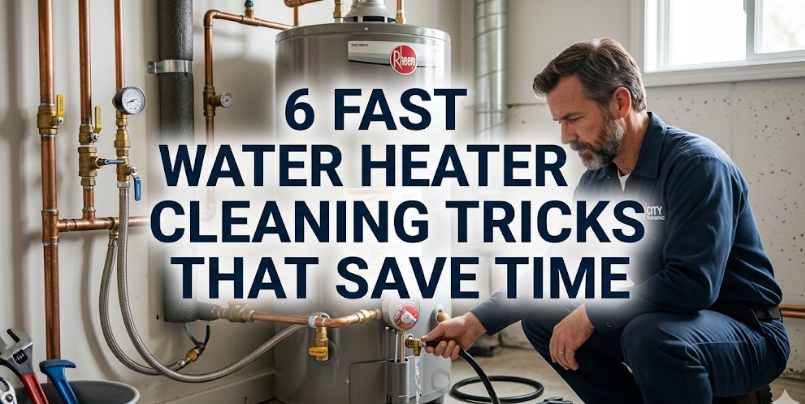
Turn off the power or gas supply. Attach a garden hose to the drain valve at the bottom of the tank. Instead of draining everything, open the valve for short bursts—about 10 to 15 seconds each. Let the water rush out, then close it. Repeat this process several times.
These bursts stir up and remove loose sediment without requiring a full drain. It’s like shaking a bottle instead of emptying it completely.
Why it saves time:
You avoid waiting for the tank to fully drain and refill, which can take 30–60 minutes depending on size.
when to use it:
Perfect for regular maintenance every few months.
trick 2: use pre-heated water to speed up draining
One of the most overlooked tricks is using the existing hot water in the tank to your advantage.
Instead of waiting for the water to cool completely before draining, you can start the process while it’s still warm—but not dangerously hot. Warm water flows faster and carries sediment more effectively than cold water.
To do this safely:
Turn off the heater and let it sit for about 30 minutes. This reduces the temperature enough to handle safely while still keeping the water warm.
Then proceed with draining or flushing.
Why it saves time:
Faster flow means less waiting, and warm water loosens sediment more easily, reducing the need for repeated flushing.
bonus tip:
Wear gloves and ensure the hose is securely connected to avoid splashes.
trick 3: the vinegar soak shortcut for stubborn buildup
If your heater hasn’t been cleaned in a long time, sediment can harden into stubborn deposits. Scrubbing inside the tank isn’t practical, so you need a simple solution.
Vinegar is the answer.
Instead of fully disassembling anything, you can introduce vinegar into the system through the inlet or by partially draining the tank and refilling it with a vinegar-water mix.
Let it sit for 1–2 hours, then flush.
Why it works:
Vinegar breaks down mineral deposits without damaging the tank lining.
Why it saves time:
It eliminates the need for manual cleaning or repeated flushing cycles.
real-world insight:
Many homeowners skip cleaning for years because they think it requires tools and expertise. This shortcut makes deep cleaning almost effortless.
trick 4: clean the drain valve while flushing
A common mistake is focusing only on the inside of the tank while ignoring the drain valve. Over time, sediment can clog the valve, slowing down the entire process.
While you’re flushing, take a moment to open and close the valve several times. If possible, remove it briefly to clear any debris stuck inside.
Why it saves time:
A clean valve allows faster drainage, which speeds up every future cleaning session.
small habit, big impact:
Spending an extra two minutes here can save you 10–15 minutes next time.
trick 5: use water pressure to your advantage
Instead of relying only on gravity to remove sediment, you can use incoming water pressure to stir things up inside the tank.
Here’s the trick:
While the drain valve is open, briefly turn on the cold water supply. This creates turbulence inside the tank, lifting sediment off the bottom and pushing it out through the hose.
Do this in short bursts—just a few seconds at a time.
Why it saves time:
It removes more sediment in fewer cycles, reducing the overall cleaning duration.
important note:
Don’t leave the water supply on continuously while draining, as this can dilute the process. Controlled bursts work best.
trick 6: schedule micro-cleanings instead of one big job
The biggest time-saving trick isn’t about technique—it’s about timing.
Instead of waiting until your water heater is heavily clogged, perform small, regular cleanings. A quick flush every 3–4 months takes less than 10 minutes and prevents major buildup.
Think of it like brushing your teeth. A little effort regularly saves you from bigger problems later.
Why it saves time:
Routine maintenance eliminates the need for deep, time-consuming cleaning sessions.
mindset shift:
Cleaning becomes a quick habit instead of a dreaded task.
a simple checklist you can follow
Here’s a quick routine you can use every few months:
Turn off power or gas
Let water cool slightly
Attach hose to drain valve
Perform quick flush in short bursts
Use brief cold water pressure bursts
Close everything and restore power
Total time: about 10–15 minutes
That’s it. No complicated tools, no full-day commitment.
common mistakes that waste time
Even with the best intentions, some habits can slow you down:
waiting too long between cleanings
draining the entire tank unnecessarily
ignoring the drain valve condition
not using water pressure to assist flushing
overcomplicating the process with too many steps
Avoiding these mistakes is just as important as using the right tricks.
how often should you clean your water heater?
The ideal frequency depends on your water quality.
If you have hard water, you may need to clean it every 3 months. For softer water, twice a year is usually enough.
Signs you need cleaning sooner:
water takes longer to heat
unusual noises from the tank
reduced hot water supply
slightly discolored water
listening to your system saves time in the long run.
the long-term benefits of quick cleaning
Spending a few minutes on maintenance delivers long-term rewards:
lower energy bills
longer heater lifespan
consistent hot water supply
fewer repair issues
It’s one of those rare tasks where a small effort pays off in multiple ways.
a short story from everyday life
Imagine this: It’s winter, and you wake up early for work. You turn on the shower, expecting warm water, but it’s barely lukewarm. You adjust the knob, wait a bit longer, but nothing changes.
Now you’re late, frustrated, and wondering if the heater is broken.
In many cases, it’s not broken—it’s just full of sediment.
A simple 10-minute cleaning session done a month earlier could have prevented the entire situation.
That’s the real value of these tricks. They don’t just save time during cleaning—they save time in your daily life.
building a routine that sticks
The hardest part of maintenance isn’t the task itself—it’s remembering to do it.
Here are a few simple ways to stay consistent:
set a reminder on your phone every 3 months
tie the task to a seasonal habit (like changing weather)
keep your hose and tools easily accessible
track your last cleaning date on a note
Consistency turns a chore into a habit.
final thoughts
Cleaning your water heater doesn’t have to be complicated or time-consuming. With the right techniques, you can maintain peak performance in just a few minutes every few months.
The six tricks you’ve learned—quick flushing, using warm water, vinegar soaking, cleaning the valve, using pressure bursts, and scheduling micro-cleanings—are simple but powerful.
They’re not about doing more work. They’re about doing smarter work.
And in a world where time always feels limited, that makes all the difference.
frequently asked questions
- Is it safe to clean a water heater by myself?
Yes, as long as you follow basic safety steps like turning off power or gas and allowing the water to cool slightly. Most routine cleaning methods are simple and safe for homeowners.
- Can I use anything other than vinegar for cleaning?
Vinegar is the most common and safest option. Some people use specialized descaling solutions, but vinegar works well and is widely available.
- How long does a quick flush take?
A quick flush usually takes 10–15 minutes. It’s much faster than a full drain and still effective for regular maintenance.
- What happens if I never clean my water heater?
Sediment buildup can reduce efficiency, increase energy costs, and eventually damage the heater. In severe cases, it can shorten the lifespan significantly.
- Why is my water heater making popping noises?
This is often caused by sediment buildup at the bottom of the tank. Cleaning the heater usually resolves the issue.
- Do tankless water heaters need cleaning too?
Yes, but the process is different. Tankless systems require descaling to remove mineral buildup, usually once or twice a year depending on water quality.
By applying these time-saving tricks, you turn what used to feel like a complicated chore into a quick, manageable routine—one that keeps your water heater running smoothly without disrupting your day.
About the Author