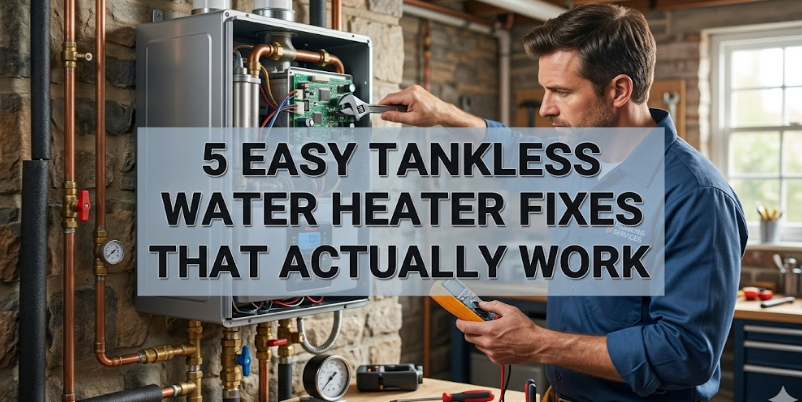
5 Easy Tankless Water Heater Fixes That Actually Work
5 easy tankless water heater fixes that actually work
There’s something quietly frustrating about turning on a tap expecting a steady stream of hot water—only to be met with a lukewarm disappointment or, worse, an icy shock. Tankless water heaters are often marketed as the “set it and forget it” solution, promising endless hot water and improved efficiency. And to be fair, they do deliver on those promises—most of the time.
But like any hardworking system tucked behind walls or mounted in a corner, tankless units develop quirks. They hum along perfectly for months or even years, then suddenly start acting up in small but noticeable ways. The good news is that many of these issues aren’t catastrophic. In fact, a handful of simple, practical fixes can restore performance without calling in a technician or replacing expensive components.
This guide isn’t just a list of fixes—it’s a grounded, experience-driven walkthrough of what actually works in real homes, with real usage patterns. These are the kinds of adjustments and corrections homeowners often overlook, yet they make a significant difference.
Let’s get into it.
understanding why tankless heaters act up in the first place
Before diving into fixes, it helps to understand why problems occur at all. Tankless systems heat water on demand. That means they rely on sensors, flow rates, heat exchangers, and precise calibration. If even one of those elements is slightly off, the whole experience changes.
Unlike traditional tank heaters, which store hot water and mask small inefficiencies, tankless units are immediate and reactive. That’s why issues show up quickly—and why simple fixes often work surprisingly well.
fix 1: flush out mineral buildup (the silent performance killer)
If there’s one fix that solves more problems than any other, it’s descaling or flushing the system. Hard water—common in many regions—contains minerals like calcium and magnesium. Over time, these minerals accumulate inside the heat exchanger.
You might not notice it right away. But gradually, you’ll see signs:
- Water temperature fluctuates
- Flow rate drops
- The unit makes unusual noises
- Heating takes longer than usual
What’s happening inside is simple: scale buildup acts like insulation. It prevents efficient heat transfer, forcing the unit to work harder.
The fix is straightforward. A flush using a descaling solution (often vinegar or a commercial cleaner) removes that buildup. Most homeowners can do this with a pump kit and a couple of hoses.
What makes this fix powerful isn’t just that it solves current problems—it prevents future ones. Regular flushing (once a year, or more often in hard water areas) keeps the system operating close to its original efficiency.
A small note from experience: even units that seem “fine” often perform noticeably better after a flush. It’s one of those maintenance steps that pays off immediately.
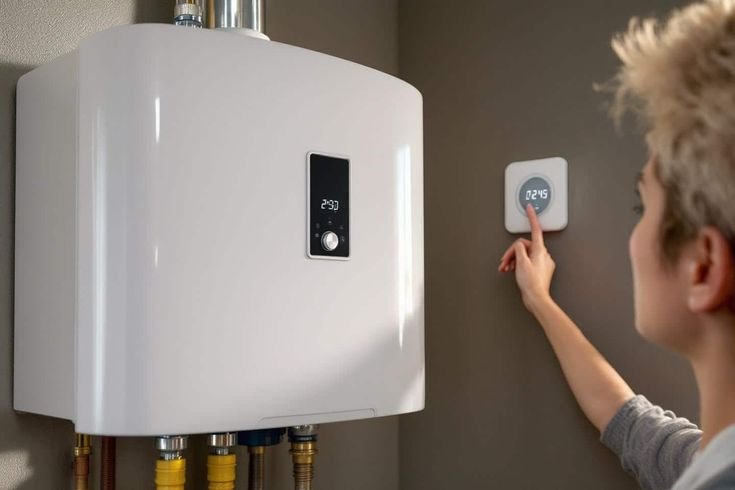
fix 2: clean the inlet filter (a five-minute solution people forget)
Inside every tankless water heater is a small but crucial component: the inlet filter. Its job is to catch debris before it enters the system. Over time, it collects sediment, dirt, and small particles.
When this filter gets clogged, water flow decreases. And since tankless heaters rely on a minimum flow rate to activate heating, a dirty filter can lead to inconsistent or no hot water.
Symptoms often include:
- Weak water pressure when using hot water
- Heater turning on and off unexpectedly
- Delayed heating
Cleaning the filter is surprisingly simple. Shut off the water supply, remove the filter, rinse it under running water, and reinstall it. That’s it.
What’s interesting is how often this fix gets overlooked. People tend to assume something more complex is wrong, when in reality, it’s just a small blockage.
Think of it like cleaning a vacuum filter—basic, but essential.
fix 3: check the gas supply or power source (don’t assume it’s fine)
Tankless heaters depend heavily on consistent energy input—either gas or electricity. Even a minor disruption can affect performance.
For gas-powered units, issues may include:
- A partially closed gas valve
- Low gas pressure
- Air in the gas line
For electric units:
- Tripped circuit breakers
- Loose wiring
- Insufficient power supply
The tricky part is that these issues don’t always cause a complete shutdown. Instead, they lead to underperformance—water that never quite reaches the desired temperature, or heating that cuts out mid-use.
Start with the basics:
- Make sure the gas valve is fully open
- Check if other gas appliances are working properly
- Reset circuit breakers if needed
It sounds almost too simple, but this fix works more often than people expect. Systems are only as reliable as the energy feeding them.
There’s a certain satisfaction in solving a “big” problem with such a small check.
fix 4: adjust the temperature setting (small change, big impact)
Sometimes the issue isn’t mechanical at all—it’s just a matter of settings.
Tankless heaters allow precise temperature control. But if the temperature is set too high, the system may struggle to maintain it under heavy demand. On the flip side, if it’s set too low, the water never feels adequately hot.
There’s also something called the “cold water sandwich effect,” where bursts of cold water interrupt hot flow. Incorrect temperature settings can make this more noticeable.
A good starting point is around 120°F (49°C). This is hot enough for most uses while remaining efficient and safe.
Adjusting the temperature does a few things:
- Reduces strain on the system
- Improves consistency
- Minimizes energy consumption
It’s one of those fixes that feels almost too easy—but it works because it aligns the system with realistic demand.
fix 5: inspect venting and airflow (often ignored, but critical)
For gas tankless heaters, proper venting is essential. These systems need to expel exhaust gases safely while drawing in fresh air for combustion.
If venting is blocked, restricted, or improperly installed, several issues can arise:
- Unit shuts down unexpectedly
- Error codes appear
- Heating becomes inconsistent
Common culprits include:
- Debris in the vent pipe
- Bird nests or leaves
- Improper vent angles or lengths
Even partial blockages can disrupt airflow enough to affect performance.
A quick inspection can reveal obvious issues. Clearing obstructions or ensuring vents are properly aligned can restore normal operation.
What’s interesting about this fix is how external it is. The problem isn’t inside the heater—it’s in the environment around it.
bringing it all together
What ties these five fixes together is their simplicity. None of them require advanced tools or deep technical expertise. Yet each one addresses a core aspect of how tankless systems operate: flow, heat transfer, energy supply, calibration, and airflow.
It’s easy to assume that modern appliances are too complex for DIY solutions. But tankless heaters, despite their sophistication, still rely on basic physical principles.
Water flows. Heat transfers. Air moves. Energy powers.
When one of those elements is disrupted, performance drops. Restore it, and the system often snaps back to life.
a few practical habits that prevent future issues
While the focus here is on fixes, prevention is just as important. Small habits can keep your system running smoothly for years.
- Schedule annual flushing, especially in hard water areas
- Check filters every few months
- Keep the area around the unit clean and unobstructed
- Monitor temperature settings seasonally
- Pay attention to small changes—they’re early warning signs
These aren’t complicated routines. But they create a kind of rhythm—an awareness of how your system behaves over time.
And that awareness is what turns minor maintenance into long-term reliability.
final thoughts
Tankless water heaters are incredibly efficient, but they’re not entirely hands-off. They respond to their environment, usage patterns, and maintenance habits.
The encouraging part is that most common problems don’t require expensive repairs or professional intervention. A bit of attention, a few simple checks, and a willingness to troubleshoot can go a long way.
If your system isn’t performing the way it should, there’s a good chance one of these five fixes will make a noticeable difference.
And sometimes, that’s all it takes to turn frustration back into comfort—one hot shower at a time.
frequently asked questions
- how often should i flush my tankless water heater?
Most manufacturers recommend flushing once a year. However, if you live in an area with hard water, doing it every 6–9 months can significantly improve performance and extend the unit’s lifespan. - why does my tankless heater suddenly go cold during use?
This could be due to low flow rate, a clogged filter, or inconsistent energy supply. It may also be related to the “cold water sandwich effect,” especially if multiple fixtures are in use. - can i clean the inlet filter myself?
Yes, it’s a simple DIY task. Just turn off the water supply, remove the filter, rinse it thoroughly, and reinstall it. No special tools are usually required. - what temperature should i set my tankless water heater to?
A setting of around 120°F (49°C) is ideal for most households. It balances comfort, safety, and energy efficiency. - is it normal for tankless heaters to make noise?
Some noise is normal, especially during operation. However, loud or unusual sounds may indicate mineral buildup or airflow issues that should be addressed. - when should i call a professional instead of fixing it myself?
If you’ve tried basic fixes and the problem persists, or if you encounter error codes you don’t understand, it’s best to consult a professional. Gas-related issues and internal component failures should always be handled by experts.
About the Author