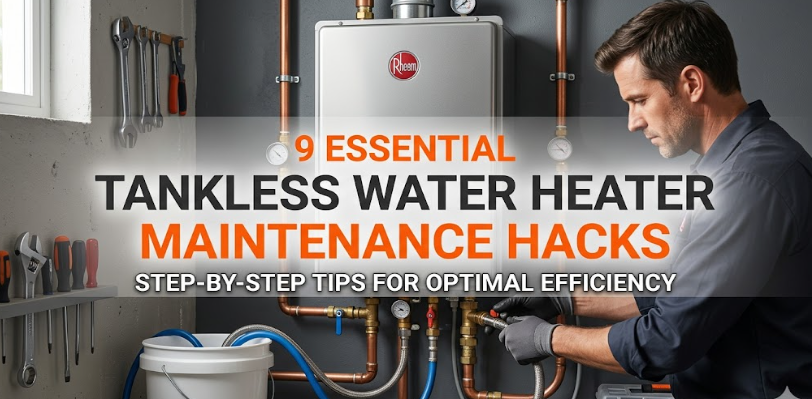
9 Essential Tankless Water Heater Maintenance Hacks
9 Essential Tankless Water Heater Maintenance Hacks
There’s something oddly satisfying about turning on a tap and getting hot water instantly. No waiting, no bulky tank humming in the background, no running out halfway through a shower. Tankless water heaters promise all of that—and when they work well, they feel almost invisible. But that invisibility can be misleading. Unlike traditional tanks that fail loudly and obviously, tankless systems tend to decline quietly. Performance dips, efficiency drops, and small issues snowball into expensive repairs.
Maintenance, then, isn’t optional—it’s the difference between a system that lasts 20 years and one that struggles after five. The good news? You don’t need to be a technician to keep your unit in great shape. With a handful of practical habits and a bit of awareness, you can extend its lifespan, maintain efficiency, and avoid unexpected cold showers.
This guide walks through nine essential maintenance hacks—not the generic advice you’ve heard before, but real, practical actions that actually make a difference.
understanding your system before touching anything
Before diving into maintenance, it helps to understand what you’re dealing with. A tankless water heater heats water on demand using powerful heating elements or gas burners. Water flows through a heat exchanger, gets heated instantly, and exits to your tap.
Because everything happens quickly and under pressure, even small issues—like mineral buildup or airflow restrictions—can affect performance. Maintenance isn’t just about cleaning; it’s about preserving the delicate balance inside the unit.
hack 1: flush the system regularly (and do it properly)
If there’s one maintenance task that matters more than anything else, it’s descaling or flushing the unit.
Over time, minerals like calcium and magnesium—especially if you have hard water—build up inside the heat exchanger. This buildup reduces efficiency, restricts flow, and forces the system to work harder than necessary.
A proper flush involves:
- Turning off power and water supply
- Connecting hoses to service valves
- Circulating a descaling solution (often vinegar or a commercial cleaner)
- Rinsing thoroughly afterward
What many people get wrong is frequency. Once a year is a general rule, but if your water is particularly hard, you may need to do it every 6 months. Ignoring this step is one of the fastest ways to shorten your heater’s lifespan.
hack 2: install and maintain a water filter
Here’s something most homeowners overlook: debris doesn’t just come from inside your pipes—it comes from the municipal supply too.
Tiny particles, sediment, and rust can enter your system and clog internal components. Many tankless units include a small inlet filter, but it’s often neglected.
Maintenance here is simple:
- Locate the cold water inlet filter
- Remove and rinse it under running water
- Reinstall it carefully
Doing this every few months prevents blockages and ensures smooth water flow. If your area has particularly poor water quality, consider installing a whole-house filter.
hack 3: check for error codes before problems escalate
Tankless water heaters are smarter than most appliances. They monitor their own performance and display error codes when something goes wrong.
The mistake people make? Ignoring those codes until the system stops working entirely.
Make it a habit to:
- Glance at the display occasionally
- Look up any unfamiliar codes in the manual
- Address minor warnings early
Catching an airflow issue or temperature fluctuation early can save you from a costly repair later.
hack 4: clean the air intake and exhaust vents
For gas-powered units, proper ventilation is critical. Dust, lint, and debris can accumulate in intake and exhaust vents, restricting airflow.
When airflow is compromised:
- Combustion becomes inefficient
- The unit may overheat
- Safety systems may shut it down
Inspect vents periodically:
- Remove visible debris
- Ensure nothing is blocking the outside vent
- Check for signs of corrosion or damage
This is especially important if your unit is installed in a dusty environment like a garage or utility room.
hack 5: monitor water pressure like a pro
Tankless systems are sensitive to water pressure. Too low, and the unit may not activate properly. Too high, and internal components can wear out faster.
Ideal pressure typically falls between 40–80 psi. You can use a simple pressure gauge to check your home’s supply.
If pressure is too high:
- Install a pressure regulator
- Check for faulty valves
If pressure fluctuates:
- Inspect plumbing for leaks
- Ensure filters aren’t clogged
Stable pressure keeps your system running smoothly and prevents unnecessary strain.
hack 6: inspect electrical and gas connections
This isn’t about doing complex repairs—it’s about awareness.
For electric units:
- Look for loose wires or signs of overheating
- Ensure connections are secure
For gas units:
- Check for unusual smells
- Ensure connections are tight
- Listen for irregular burner sounds
If something seems off, don’t ignore it. Early detection prevents major failures and keeps your home safe.
hack 7: use a water softener if needed
Hard water is the silent enemy of tankless systems. Even with regular flushing, heavy mineral content can cause buildup faster than you can manage.
A water softener reduces mineral levels, which:
- Minimizes scale buildup
- Improves efficiency
- Extends the life of the heat exchanger
If your area has hard water, this isn’t a luxury—it’s a long-term investment.
hack 8: test the system’s performance periodically
Don’t wait for something to go wrong. Test your system intentionally.
Try this:
- Turn on multiple hot water taps at once
- Observe temperature consistency
- Note any delays or fluctuations
If the system struggles to keep up, it may be time for maintenance—or it could indicate a deeper issue.
This simple habit gives you insight into your heater’s health before problems become obvious.
hack 9: schedule a professional inspection annually
Even if you’re diligent with maintenance, there are things only a trained technician can spot.
A professional inspection typically includes:
- Deep cleaning of internal components
- Burner or element inspection
- Safety checks
- Calibration adjustments
Think of it like a yearly checkup. You might feel fine, but a professional can catch issues you wouldn’t notice.
bringing it all together
Maintenance isn’t about doing one big thing once a year—it’s about small, consistent actions that add up over time.
A well-maintained tankless water heater:
- Uses less energy
- Provides consistent hot water
- Lasts significantly longer
Neglect, on the other hand, leads to inefficiency, higher bills, and premature failure.
The difference between those two outcomes often comes down to a few hours of attention each year.
real-world perspective: why these hacks actually matter
It’s easy to treat maintenance like a checklist. Flush the system, clean the filter, move on. But each of these tasks connects to a deeper principle.
Flushing isn’t just cleaning—it’s restoring heat transfer efficiency.
Cleaning filters isn’t just removing debris—it’s protecting flow sensors.
Checking vents isn’t just tidying up—it’s ensuring safe combustion.
When you understand the “why,” maintenance stops feeling like a chore and starts feeling like control.
common mistakes to avoid
Even well-intentioned homeowners make mistakes that undermine their efforts.
Some of the most common include:
- Skipping descaling because “the water seems fine”
- Using harsh chemicals that damage components
- Ignoring minor error codes
- Forgetting to rinse after flushing
- Over-tightening connections during inspection
Avoiding these pitfalls is just as important as following the hacks themselves.
how to build a simple maintenance routine
You don’t need a complicated schedule. A simple routine works best:
every 3 months:
- Clean inlet filter
- Check for error codes
- Inspect vents
every 6–12 months:
- Flush the system
- Test performance
- Inspect connections
once a year:
- Schedule professional servicing
Consistency beats complexity every time.
long-term benefits you’ll actually notice
Proper maintenance doesn’t just prevent problems—it improves everyday experience.
You’ll notice:
- Faster hot water delivery
- Stable temperatures
- Lower energy bills
- Quieter operation
And perhaps most importantly, you’ll avoid that moment of dread when the water suddenly turns cold.
final thoughts
Tankless water heaters are incredibly efficient, but they’re not maintenance-free. The idea that you can install one and forget about it is a myth that leads to disappointment.
The good news is that keeping your system in top shape doesn’t require specialized skills or endless time. With a few practical habits and a bit of attention, you can keep everything running smoothly for years.
Think of maintenance not as a burden, but as a way to protect an investment—and ensure that comfort you rely on every day never skips a beat.
frequently asked questions
- how often should I flush my tankless water heater?
Most systems should be flushed once a year. However, if you live in an area with hard water, every 6 months is a safer approach to prevent mineral buildup. - can I use vinegar for descaling?
Yes, white vinegar is a common and effective descaling solution. It’s affordable and safe for most systems, though commercial cleaners may work faster. - what happens if I skip maintenance?
Skipping maintenance can lead to scale buildup, reduced efficiency, higher energy bills, inconsistent water temperature, and eventually system failure. - do electric tankless heaters need the same maintenance as gas ones?
They require similar care in terms of flushing and filter cleaning, but they don’t need vent or combustion checks since they don’t burn fuel. - how do I know if my water is too hard?
Signs include white residue on fixtures, reduced water flow, and frequent scaling inside appliances. A water test kit can give a precise measurement. - is professional servicing really necessary every year?
While not strictly mandatory, annual professional servicing helps catch hidden issues early and ensures your system runs at peak efficiency over the long term.
About the Author