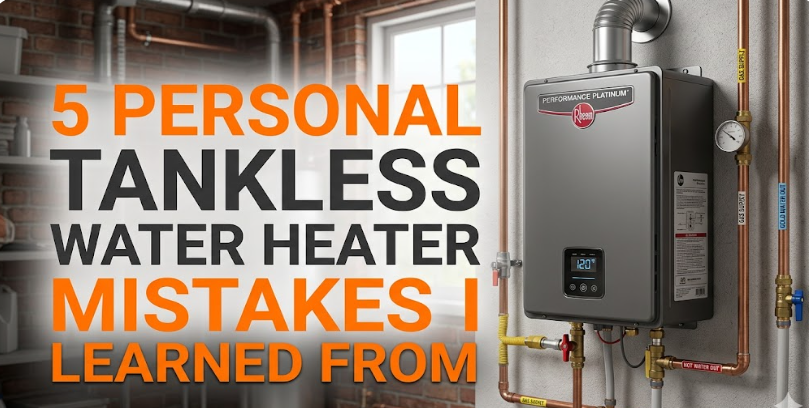
5 Personal Tankless Water Heater Mistakes I Learned From
5 Personal Tankless Water Heater Mistakes I Learned From
There’s something humbling about thinking you’ve upgraded your home—only to realize you’ve introduced a new set of problems you didn’t anticipate. That’s exactly what happened when I switched to a tankless water heater. I was drawn in by the promise of endless hot water, energy efficiency, and a sleek, modern system. On paper, it seemed like a no-brainer.
But real life doesn’t run on brochures.
Over time, I made a series of mistakes—some small, some expensive, and all memorable. Each one taught me something practical that no instruction manual or sales pitch had prepared me for. This isn’t a technical guide or a perfect checklist. It’s a lived experience, layered with trial, error, and the occasional cold shower at the worst possible moment.
Here are five personal tankless water heater mistakes I learned from—and what they changed in the way I think about home systems.
—
Ignoring the importance of proper sizing
The first mistake I made happened before the heater was even installed. I assumed that tankless systems were universally powerful—that “on-demand” meant it could handle whatever I threw at it. That assumption cost me comfort.
At the time, my household routine wasn’t particularly complex. One shower in the morning, maybe some dishwashing later. But routines evolve. Eventually, mornings became busier. Someone would start the shower while another person ran the washing machine, and suddenly, the water temperature would fluctuate unpredictably.
It wasn’t a defect. It was a mismatch.
Tankless heaters are designed to deliver a certain flow rate based on temperature rise. I didn’t fully understand that concept at the time. I didn’t consider groundwater temperature in my region or how multiple simultaneous uses would affect performance.
The result was a system that worked perfectly—until it didn’t.
Looking back, I realize sizing isn’t just a technical step. It’s a lifestyle assessment. It requires honesty about how water is actually used in your home, not just how you think it’s used.
What I changed afterward was simple but impactful. I recalculated demand realistically. I thought about peak usage rather than average usage. And if I could go back, I would have either chosen a higher-capacity unit or installed a second one for better distribution.
Lesson learned: “on-demand” doesn’t mean “unlimited.” It means “within limits you need to understand.”
—
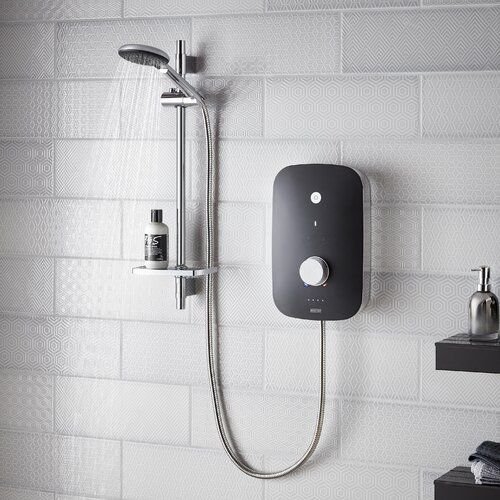
Overlooking water quality and its long-term impact
The second mistake was slower, quieter, and more damaging over time. I didn’t pay attention to water quality.
In my area, hard water is common. At the time, I knew that in a general sense, but I didn’t connect it to my tankless system. I assumed modern appliances were built to handle these conditions.
They are—to a point.
Months passed, and I began to notice subtle changes. The water pressure seemed slightly reduced. The heating response felt inconsistent. Nothing dramatic, just enough to feel “off.”
Eventually, I learned what was happening inside the unit: mineral buildup.
Tankless systems heat water rapidly using compact heat exchangers. That efficiency also makes them more vulnerable to scaling. Minerals don’t just pass through—they settle, accumulate, and gradually interfere with performance.
The mistake wasn’t just ignoring water quality. It was underestimating how quickly its effects could compound.
Once I addressed it, the difference was immediate. Descaling restored performance, but it also revealed how much efficiency I had lost without realizing it.
Now, I think of water quality as part of the system—not something external to it.
Lesson learned: what flows through your heater matters as much as the heater itself.
—
Skipping regular maintenance because “it’s modern”
This one still makes me shake my head.
When I upgraded to a tankless system, I subconsciously associated it with low maintenance. No tank, fewer moving parts, newer technology—it felt like something that would just work without much intervention.
For a while, it did.
And that was the trap.
Because everything seemed fine, I didn’t prioritize maintenance. I didn’t schedule annual flushing. I didn’t check filters regularly. I treated the system as if it were self-sustaining.
The reality, of course, is that no water system is truly maintenance-free.
Eventually, the system began to show signs of strain—longer heating times, occasional error codes, and that creeping sense that something wasn’t quite right. By the time I took action, the maintenance required was more involved than it would have been if I had stayed consistent from the start.
What I learned is that maintenance isn’t just about fixing problems. It’s about preserving performance before problems appear.
Now, I approach it differently. I treat maintenance as part of ownership, not an optional extra. A simple routine—flushing the system, cleaning filters, checking for buildup—has made a noticeable difference in reliability.
Lesson learned: modern doesn’t mean maintenance-free. It just changes the type of maintenance required.
—
Underestimating installation complexity
At the beginning, I thought installation was mostly about swapping one system for another. Remove the old tank, install the new unit, connect the lines, and you’re done.
That assumption was overly simplistic.
Tankless systems often require different venting, gas line adjustments, or electrical upgrades depending on the model. In my case, the existing setup wasn’t fully compatible. There were small compromises made during installation—nothing that seemed critical at the time, but enough to affect long-term efficiency.
For example, ventilation wasn’t as optimized as it could have been. Gas pressure wasn’t perfectly aligned with the unit’s peak demand. Individually, these details didn’t cause immediate failure. But collectively, they reduced the system’s overall performance.
The bigger realization was this: installation isn’t just a technical step—it’s the foundation of everything that follows.
If the foundation is slightly off, the system spends its entire life compensating.
After revisiting the setup and making adjustments, the improvement was noticeable. Performance stabilized, and the system felt more consistent across different usage scenarios.
Lesson learned: installation isn’t where you cut corners. It’s where you set the standard.
—
Expecting instant hot water everywhere
This might sound like a small misunderstanding, but it shaped my daily experience more than I expected.
When I first heard “tankless,” I interpreted it as “instant.” I imagined turning on any tap in the house and getting hot water immediately.
That’s not how it works.
Tankless systems heat water on demand, but they don’t eliminate the distance between the heater and the faucet. Water still has to travel through pipes. If those pipes are long or poorly insulated, there’s still a delay.
The first time I realized this was during winter. I turned on the shower, expecting immediate warmth, and waited… and waited. The heater was doing its job perfectly. The delay was in the plumbing.
It wasn’t a failure of the system. It was a mismatch between expectation and reality.
What helped was adjusting both mindset and setup. In some cases, adding a recirculation system or improving pipe insulation made a difference. But just as important was understanding what tankless systems do—and what they don’t.
Lesson learned: “on-demand heating” doesn’t mean “zero wait time.” It means efficient heating once the water arrives.
—
What these mistakes changed in me
Looking back, each mistake followed a pattern. I relied on assumptions instead of understanding. I focused on benefits without fully exploring limitations. I treated the system as a product rather than a system connected to other variables—water quality, installation, usage habits, and maintenance.
What changed wasn’t just how I used my water heater. It was how I approached home upgrades in general.
I started asking better questions. Not just “What does this do?” but “What does this require?” Not just “How efficient is it?” but “Under what conditions is it efficient?”
There’s a difference between owning a system and understanding it.
These mistakes nudged me toward that understanding.
—
A more grounded perspective on tankless systems
Today, I still believe tankless water heaters are a solid choice. They offer real advantages—space savings, energy efficiency, and the ability to meet modern household demands when properly configured.
But they’re not magic.
They require alignment between the system and the environment it operates in. When that alignment is off, even the best technology can feel disappointing. When it’s right, the system becomes almost invisible—quietly doing its job without drawing attention.
If there’s one takeaway from my experience, it’s this: success with tankless systems isn’t about avoiding mistakes entirely. It’s about recognizing them early and learning from them quickly.
Because in the end, the goal isn’t perfection. It’s reliability.
And reliability comes from understanding.
—
FAQs
- Why does my tankless water heater struggle when multiple taps are used at once?
This usually comes down to flow rate limits. Tankless systems can only heat a certain volume of water at a time. If multiple outlets demand hot water simultaneously, the system may not keep up unless it was sized for that level of usage. - How often should I descale or flush my tankless water heater?
In areas with hard water, once a year is a common recommendation. In very hard water conditions, more frequent maintenance may be needed to prevent mineral buildup. - Is it normal to wait for hot water with a tankless system?
Yes. Tankless systems heat water instantly, but the delay you experience is due to the time it takes for hot water to travel through your pipes. - Can poor installation affect performance even if the unit is new?
Absolutely. Issues like improper venting, undersized gas lines, or incorrect setup can reduce efficiency and cause long-term problems, even if the unit itself is high quality. - Do tankless water heaters really save energy?
They can, especially compared to traditional tanks that continuously heat stored water. However, actual savings depend on usage patterns, installation quality, and maintenance. - Is a water softener necessary for tankless systems?
Not always, but in hard water areas, it can significantly extend the life of the system and maintain efficiency by reducing mineral buildup.
About the Author