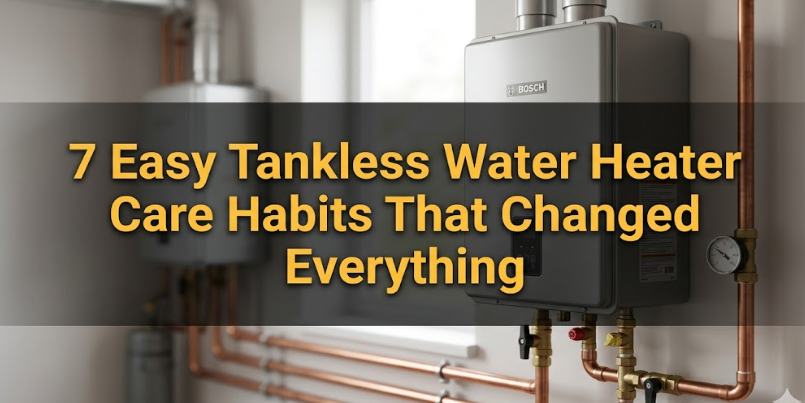
7 Easy Tankless Water Heater Care Habits That Changed Everything
7 Easy Tankless Water Heater Care Habits That Changed Everything
There was a time when I thought owning a tankless water heater meant freedom from maintenance. Endless hot water, lower energy bills, and a sleek unit on the wall—it all felt like a “set it and forget it” upgrade. But reality has a way of humbling even the most confident homeowners.
The turning point came on a cold morning when the hot water simply stopped mid-shower. No warning. No mercy. Just icy regret and a long list of lessons waiting to be learned.
What followed wasn’t just about fixing a machine—it was about developing simple, repeatable habits that completely transformed how I cared for my system. These weren’t complicated routines or expensive upgrades. They were small, practical actions that—once I adopted them—changed everything.
Here are the seven easy tankless water heater care habits that made all the difference.
understanding your system before touching it
The first habit wasn’t even physical—it was mental. I realized I had installed a system I didn’t fully understand.
Tankless water heaters don’t store hot water; they heat it on demand. That means every second of operation depends on water flow, pressure, gas supply (or electrical capacity), and internal sensors working in harmony.
Before, I treated it like a traditional tank heater. After, I started treating it like a precision appliance.
I spent an afternoon reading the manual—yes, the actual manual—and something shifted. Suddenly, error codes weren’t intimidating. The components made sense. The maintenance steps stopped feeling optional.
A simple notebook became part of this habit. I wrote down:
- Installation date
- Model number
- Last service date
- Any error codes encountered
- Water hardness in my area
This small act created awareness. And awareness, it turns out, is the foundation of good maintenance.
flushing the system regularly (and actually sticking to it)
If there’s one habit that truly changed everything, it was flushing the system—and doing it consistently.
Mineral buildup is the silent enemy of tankless heaters. Especially in areas with hard water, calcium and lime accumulate inside the heat exchanger. Over time, this reduces efficiency, increases energy consumption, and eventually leads to failure.
I used to skip this step because it felt technical. Once I learned how simple it actually was, it became routine.
Here’s what the habit looks like now:
Every six months, I set aside one hour. I connect a small pump, attach hoses, and circulate a descaling solution (usually white vinegar) through the system.
The first time I did it, I was shocked at what came out—cloudy water filled with mineral residue. It was a clear sign that neglect had consequences.
Now, each flush is cleaner than the last. That’s how I know the habit is working.
The real transformation wasn’t just in the machine—it was in the consistency. Instead of waiting for problems, I started preventing them.
keeping the inlet filter clean
This is one of those habits that takes less than five minutes but can save hours of frustration.
The inlet filter is a small mesh screen that catches debris before it enters the system. Over time, it can become clogged with sediment, especially if your water supply isn’t perfectly clean.
Before adopting this habit, I didn’t even know the filter existed. Now, I check it once a month.
The process is simple:
- Turn off the water supply
- Locate the inlet filter
- Remove and rinse it under running water
- Reinstall it
The difference this made was immediate. Water flow improved. The system stopped struggling during peak usage. And minor issues—like fluctuating temperatures—disappeared.
It’s a reminder that sometimes the smallest components have the biggest impact.
monitoring water pressure like a pro
Water pressure is something most people ignore—until it becomes a problem.
Too low, and the heater won’t activate properly. Too high, and it puts unnecessary strain on internal components.
I invested in a simple pressure gauge, and it changed how I viewed my plumbing system. Now, I know exactly what’s happening instead of guessing.
The ideal range for most systems is between 30 and 80 psi. Anything outside that range deserves attention.
Once, I noticed a spike in pressure and traced it back to a faulty regulator. Fixing it early prevented what could have been serious damage.
This habit isn’t about obsession—it’s about awareness. A quick check every few weeks is enough to stay ahead of issues.
maintaining proper ventilation and airflow
Tankless water heaters, especially gas-powered ones, rely on proper ventilation to operate safely and efficiently.
At first, I overlooked this completely. The unit was installed, it worked, and that was enough—or so I thought.
But dust, debris, and even small obstructions can affect airflow. Over time, this impacts performance and can even trigger safety shutoffs.
Now, I make it a point to:
- Keep the area around the unit clear
- Check vent pipes for blockages
- Wipe down external surfaces to prevent dust buildup
It’s not a glamorous habit, but it’s essential. And it only takes a few minutes every now and then.
The surprising benefit? The system runs quieter and more smoothly. It’s like giving it room to breathe—literally.
checking for leaks before they become disasters
Leaks don’t usually start as dramatic events. They begin as small, almost invisible drips.
Before adopting this habit, I never thought to inspect connections unless something was obviously wrong. Now, I check regularly.
Once a month, I take a few minutes to look at:
- Pipe connections
- Valves
- The bottom of the unit
- Surrounding floor area
I also run my hand along joints to feel for moisture.
This habit has already paid off. I caught a minor leak early—something that could have caused significant damage if left unchecked.
There’s a certain peace of mind that comes from knowing everything is dry and secure.
scheduling professional maintenance once a year
Even with the best habits, there’s value in bringing in a professional.
I used to see this as unnecessary. After all, if I was doing the basics, what more was needed?
The answer: expertise.
A trained technician can spot issues that aren’t visible to the untrained eye. They can test components, clean internal parts more thoroughly, and ensure everything is operating at peak efficiency.
Now, I schedule a professional service once a year—no exceptions.
The cost is minimal compared to the potential savings. And the confidence it provides is invaluable.
It’s like taking your car for an annual check-up. You might not notice anything wrong, but that doesn’t mean everything is perfect.
building habits that last
What surprised me most about this journey wasn’t the technical knowledge—it was how quickly these actions became habits.
At first, each task felt like a chore. Something to remember. Something to schedule.
But over time, they blended into my routine. Flushing the system became as normal as cleaning the house. Checking the filter became second nature.
The real transformation wasn’t just in the heater—it was in my mindset.
I stopped reacting to problems and started preventing them.
And that shift changed everything.
a simple monthly checklist
To make things even easier, I created a quick checklist that I follow every month. It keeps me organized and ensures nothing gets overlooked.
Monthly:
- Check inlet filter
- Inspect for leaks
- Observe water pressure
- Clear area around unit
Every 6 months:
- Flush system
Annually:
- Professional maintenance
Having this structure removes guesswork. It turns maintenance into a system rather than a series of random tasks.
the long-term impact
These habits didn’t just improve performance—they extended the life of my water heater.
Energy bills stabilized. Water temperature became consistent. Unexpected breakdowns became a thing of the past.
But beyond the practical benefits, there’s something deeper: confidence.
Confidence that the system will work when I need it. Confidence that I’m not ignoring hidden problems. Confidence that I’m in control.
And all of it came from simple, manageable habits.
It’s easy to think that big changes require big actions. But in this case, it was the small, consistent steps that made the biggest difference.
frequently asked questions
- how often should I flush my tankless water heater?
Most systems benefit from flushing every 6 to 12 months. If you live in an area with hard water, aim for every 6 months to prevent mineral buildup. - can I flush the system myself or should I hire a professional?
You can absolutely do it yourself with the right tools and instructions. However, if you’re unsure, hiring a professional for the first time can help you learn the process. - what are the signs that my heater needs maintenance?
Common signs include fluctuating water temperature, reduced flow, strange noises, or error codes. Regular maintenance helps prevent these issues. - is a water softener necessary for tankless systems?
If you have hard water, a water softener can significantly reduce mineral buildup and extend the life of your system. - how long do tankless water heaters last?
With proper care and maintenance, they can last 15–20 years or even longer. Neglect can shorten that lifespan considerably. - does regular maintenance really save money?
Yes. It improves efficiency, reduces energy consumption, and prevents costly repairs or replacements.
In the end, caring for a tankless water heater isn’t about mastering complex techniques. It’s about showing up consistently, paying attention to the details, and respecting the system you rely on every day.
Seven simple habits. That’s all it took to turn frustration into reliability—and to make something as ordinary as hot water feel dependable again.
About the Author