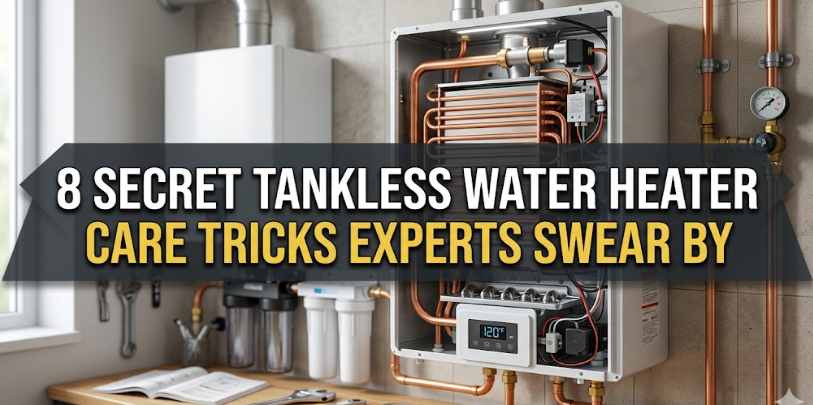
8 Secret Tankless Water Heater Care Tricks Experts Swear By
8 Secret Tankless Water Heater Care Tricks Experts Swear By
Tankless water heaters have changed how modern homes access hot water. Instead of storing heated water in a bulky tank, these systems heat water on demand, which saves space, energy, and long-term utility costs. But while they’re efficient, they are not maintenance-free. In fact, most homeowners unknowingly shorten the lifespan of their units simply because they don’t know a few insider maintenance habits.
Professional plumbers and HVAC technicians often rely on small but powerful “hidden” maintenance techniques that keep tankless systems running like new for years. These aren’t complicated repairs or expensive services—just consistent care habits that make a huge difference over time.
Below are 8 secret tankless water heater care tricks experts swear by, along with practical explanations and real-world application tips.
- The monthly “flow check” habit most homeowners ignore
One of the simplest but most overlooked maintenance tricks is regularly checking water flow consistency.
Experts recommend turning on a hot water tap fully and observing:
- Is the flow steady or fluctuating?
- Does the temperature swing up and down?
- Is there a delay before hot water appears?
These small observations help detect early warning signs like mineral buildup, partial clogging, or inlet screen blockage.
Why it matters:
Tankless systems depend on precise flow sensors. If sediment or scale interferes, the unit misreads demand and may shut down or overheat.
How experts do it:
Technicians often run a “flow stress test” by opening multiple taps simultaneously to check system stability under load.
Pro tip:
Do this once a month, especially if you notice inconsistent hot water in showers.
- The vinegar flush timing trick (not just annual flushing)
Most homeowners have heard about descaling tankless heaters with vinegar, but experts follow a more strategic timing method rather than a fixed schedule.
Instead of flushing once a year blindly, professionals adjust based on water hardness:
- Hard water areas: every 3–4 months
- Medium hardness: every 6 months
- Soft water: once a year or less
Why this matters:
Scale buildup is the number one killer of tankless heating elements. Even a thin layer of calcium reduces heat transfer efficiency dramatically.
Expert trick:
Technicians watch for subtle signs like longer heating delays or slight temperature drops before scheduling a flush.
DIY method summary:
- Turn off power and gas supply
- Attach service hoses
- Circulate white vinegar for 45–60 minutes
- Rinse thoroughly with clean water
This small adjustment alone can extend unit life by years.
- The inlet filter “hidden blockage” routine
Inside every tankless water heater is a small inlet water filter designed to trap debris before it enters the heating chamber. Most homeowners don’t even know it exists.
Experts swear by checking this filter every 2–3 months.
What they often find:
- Sand particles
- Rust flakes from pipes
- Tiny mineral deposits
Why it’s critical:
Even a partially clogged filter reduces water pressure, causing the heater to misfire or shut down.
Expert habit:
Technicians gently remove and rinse the filter under running water, sometimes using a soft toothbrush for stubborn debris.
Warning sign you missed it:
If your hot water pressure suddenly drops while cold water remains strong, this filter is often the culprit.
- The “temperature cycling reset” trick for efficiency
Tankless water heaters sometimes develop inefficient heating cycles over time. Experts fix this using a simple reset pattern that most homeowners never try.
Here’s the trick:
- Turn the unit off completely for 5–10 minutes
- Run a hot water tap for 30 seconds (with power off)
- Restart the system
- Set temperature back to default (usually 120°F / 49°C)
Why it works:
This resets internal sensors and clears minor electronic misreads in flow and temperature detection systems.
When experts use it:
- After power outages
- After descaling
- When temperature becomes inconsistent
This trick often restores performance without any repair costs.
- The “air intake dust trap” cleaning secret
Many people don’t realize that tankless water heaters rely heavily on proper air intake for combustion efficiency.
Over time, dust, lint, and even small insects can block intake vents.
Experts clean this area every few months using:
- Low-pressure air blowers
- Soft brushes
- Vacuum attachments
Why it matters:
Restricted airflow leads to poor combustion, error codes, and even safety shutdowns.
Hidden expert insight:
In homes near construction zones or dusty roads, intake vents can clog much faster than expected.
If your unit is installed outdoors, this becomes even more important.
- The water pressure balancing trick most installers don’t explain
Tankless heaters are designed to operate within a specific pressure range. Too low or too high can affect performance.
Experts often test and adjust household pressure regulators to keep it stable between:
- 40 to 60 PSI (ideal range)
Why it matters:
- Low pressure = weak heating activation
- High pressure = internal stress and valve wear
Expert habit:
They install or adjust pressure-reducing valves (PRVs) if fluctuations are detected.
Simple homeowner check:
If your shower pressure suddenly becomes too strong or too weak, don’t ignore it—your heater is likely under stress too.
- The “scale prevention mindset” using everyday filtration
Instead of constantly reacting to scale buildup, experts focus on preventing it from forming in the first place.
One of their favorite tricks is installing or maintaining:
- Whole-house water filters
- Sediment pre-filters
- Inline scale inhibitors
Why this is powerful:
Prevention reduces maintenance frequency dramatically and keeps heating efficiency stable year-round.
Expert insight:
Even a basic sediment filter can reduce tankless heater maintenance needs by up to 50% in hard water regions.
Bonus habit:
Replace filter cartridges regularly—many homeowners install them and forget them entirely.
- The annual “performance audit” professionals never skip
Beyond routine maintenance, experts perform a yearly system audit to evaluate long-term performance.
This includes checking:
- Heating speed consistency
- Error code history
- Ventilation condition
- Gas or electric efficiency
- Internal scaling levels
- Water flow stability
Why it matters:
Small issues often build up silently. A yearly audit catches problems before they become expensive repairs.
Expert approach:
Technicians compare current performance with installation baseline data. If heating time has increased even slightly, they investigate immediately.
Homeowner version:
You can track:
- How fast hot water arrives
- Whether temperature stays stable during showers
- Any unusual noises or delays
These clues are often enough to spot early decline.
Conclusion
Tankless water heaters are incredibly efficient systems, but they depend heavily on clean water flow, stable pressure, and consistent maintenance habits. The difference between a unit that lasts 8 years and one that lasts 20 often comes down to small, consistent care routines rather than major repairs.
By following these 8 expert-level care tricks—flow checking, smart descaling, filter cleaning, pressure balancing, airflow maintenance, and annual audits—you dramatically improve both performance and lifespan.
Most importantly, these habits reduce unexpected breakdowns and keep hot water reliable throughout the year.
FAQs
- How often should I flush my tankless water heater?
It depends on water hardness. Hard water areas may need flushing every 3–4 months, while soft water areas can go up to a year. - What happens if I don’t clean the inlet filter?
A clogged filter reduces water pressure, causes heating issues, and may trigger system shutdowns. - Why does my tankless water heater take time to heat water?
This can be due to scale buildup, low water pressure, or sensor misalignment. - Can I use vinegar for descaling?
Yes, white vinegar is commonly used by professionals for safe and effective descaling. - What temperature should I set my tankless water heater to?
The recommended setting is usually around 120°F (49°C) for safety and efficiency. - How do I know if my unit needs professional servicing?
If you notice fluctuating temperatures, error codes, or reduced flow even after cleaning filters, it’s time for a professional inspection.
About the Author